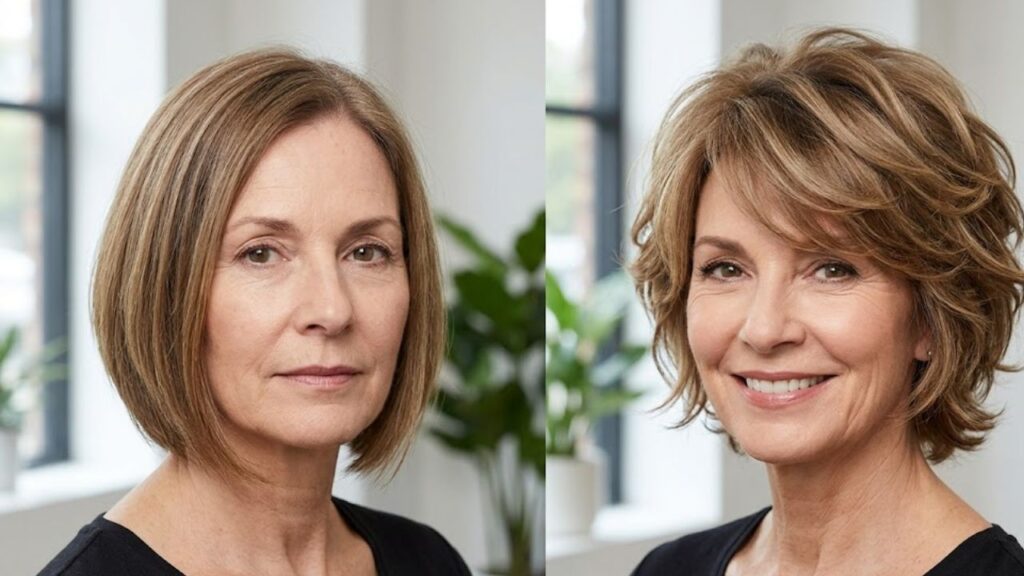
The sharp outline that once framed her face so beautifully now feels noticeably different — flatter, stricter, and far less forgiving than it used to. Over time, her hair texture has gradually changed. The strands have become finer, especially around the crown where fullness once created natural lift. The back that once looked full and sculpted now appears softer and less structured.
A style that once felt bold and polished may now highlight the very features she would rather soften — reduced volume, a more delicate neckline, and facial contours that have naturally evolved with age.
Why the Angled Bob Often Loses Its Magic After 55
For many years the angled bob was one of the most requested haircuts in salons across the world. Its signature silhouette — shorter at the back and gradually longer toward the chin — creates a sleek and dramatic shape defined by sharp, clean lines.

This haircut works exceptionally well on thick, dense hair because the natural weight and fullness of the strands help maintain the structure of the cut. The stacked layers at the back build a rounded curve that gives the hair a sculpted and polished appearance.
However, hair naturally changes with age.
- Hair density slowly decreases over time
- Individual strands become finer and lighter
- Volume at the crown often begins to reduce
When these changes occur, the sharp angled shape can begin to look severe rather than flattering. Instead of lifting the face, the downward line may draw attention toward the jawline and neck.
The stacked back that once appeared full may also begin to flatten slightly, creating a softer shape rather than the sculpted effect the haircut was designed to produce.
In many cases, the haircut itself hasn’t failed — the hair texture has simply evolved.
The Softer Bob Hairstylists Recommend Today
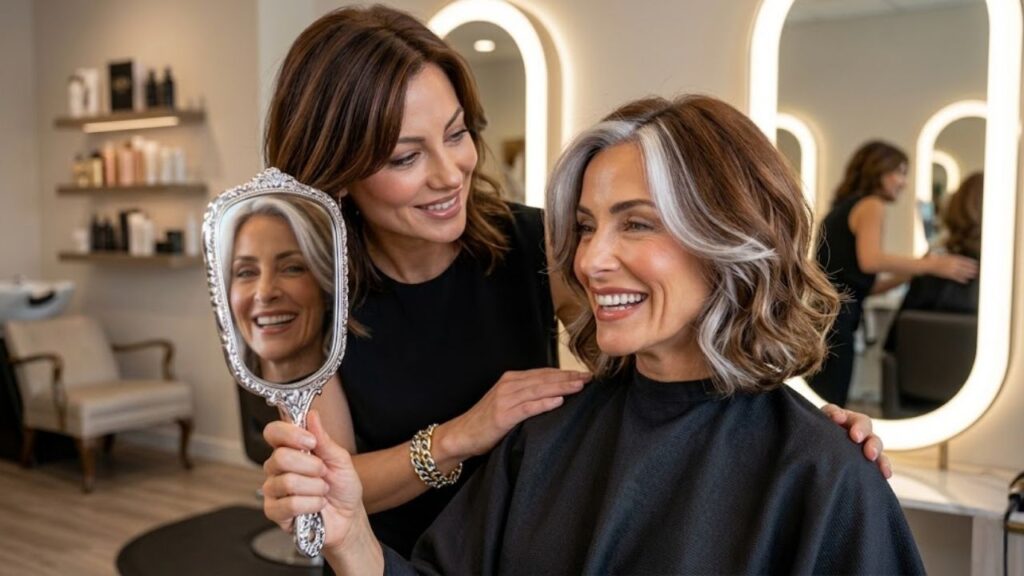
Modern stylists increasingly suggest a softer and more rounded version of the bob. This updated variation keeps a similar length but removes the dramatic angles that can feel too harsh on finer hair.
This contemporary shape usually sits between the ear and the middle of the neck. The back remains slightly shorter than the front, but the transition is gradual and subtle rather than sharply angled.
The real difference lies within the internal structure of the haircut.
- Hidden internal layers at the crown create gentle lift
- The outer edges are softly textured rather than sharply cut
- Volume is distributed higher toward the crown and temples
This subtle shift restores balance and movement to finer hair. The finished look feels lighter, softer, and more natural. The jawline appears less emphasized, the neckline feels relaxed, and the hair moves freely instead of holding a rigid form.
Why This Modern Bob Is Easier to Style
One of the biggest advantages of this softer bob is its low-maintenance styling routine.
Because the haircut supports the hair’s natural movement, it often looks polished with very little effort. Many people can simply rough-dry their hair using their fingers and a small amount of styling mousse.
Unlike the traditional angled bob, which typically requires careful blow-drying to maintain its structure, this updated version works with the natural texture of the hair rather than fighting against it.

How to Ask for This Haircut at the Salon
Instead of simply asking for “a bob,” it helps to describe the exact shape and texture you want. Being specific allows your stylist to tailor the cut to your hair type and density.
You may want to discuss these details during your consultation:
- Ask for a softly rounded bob that skims the neckline
- Request soft edges instead of dramatic angles
- Ask for subtle crown layers to create natural lift
- Mention that you want movement and softness around the face
Bringing reference photos can also be helpful, especially images that match your hair texture — whether it is fine, medium, thick, or naturally grey.
Haircut Techniques to Avoid With Fine Hair
When hair becomes finer or thinner, certain cutting techniques can unintentionally highlight areas with less density.
Many stylists recommend avoiding:
- Heavy stacking at the nape that can expose thinner sections
- Excessive razor cutting that weakens the ends
- Very short top layers that may stick up rather than add fullness
The goal is to create softness, movement, and balanced volume without making the structure overly complicated.
Updating a Long-Time Signature Hairstyle
Letting go of a haircut you have worn for many years can feel emotional. A signature style often becomes part of how we see ourselves.
But updating a hairstyle isn’t about abandoning the past — it’s about adjusting your look so it works beautifully with who you are today.
As hair texture and facial features evolve, the most flattering haircuts evolve as well. The softer rounded bob works with modern hair texture instead of trying to recreate the structure designed for thicker density.
Many women discover that once the harsh angles disappear, their face appears brighter and more relaxed. Friends may not even notice the haircut itself — they simply say that you look refreshed.
Classic Angled Bob vs Softer Modern Bob
| Feature | Classic Angled Bob | Softer Modern Bob | Benefit |
|---|---|---|---|
| Back Shape | Sharply stacked layers | Soft rounded shape | More natural volume distribution |
| Perimeter | Strict straight lines | Soft lightly textured edges | Less emphasis on the jawline |
| Layer Placement | Minimal internal lift | Subtle layers at the crown | Creates height and gentle movement |
| Styling Needs | Frequent blow-drying required | Air-dry or quick rough-dry styling | Lower daily maintenance |
| Overall Look | Structured and graphic | Light airy movement | Softens facial features |
A Small Update That Can Transform the Look
Sometimes the most effective style changes are subtle rather than dramatic. A few centimeters of length, a softer outline, or hidden internal layers can completely transform how hair frames the face.
The result is a hairstyle that feels current, flattering, and beautifully suited to the natural changes that come with time.